Problem Statement
Smart-glasses experiences often break when realtime communication between edge client and backend is unreliable. We focused on a resilient architecture for low-latency AR interactions and service modularity.
Solution & Approach
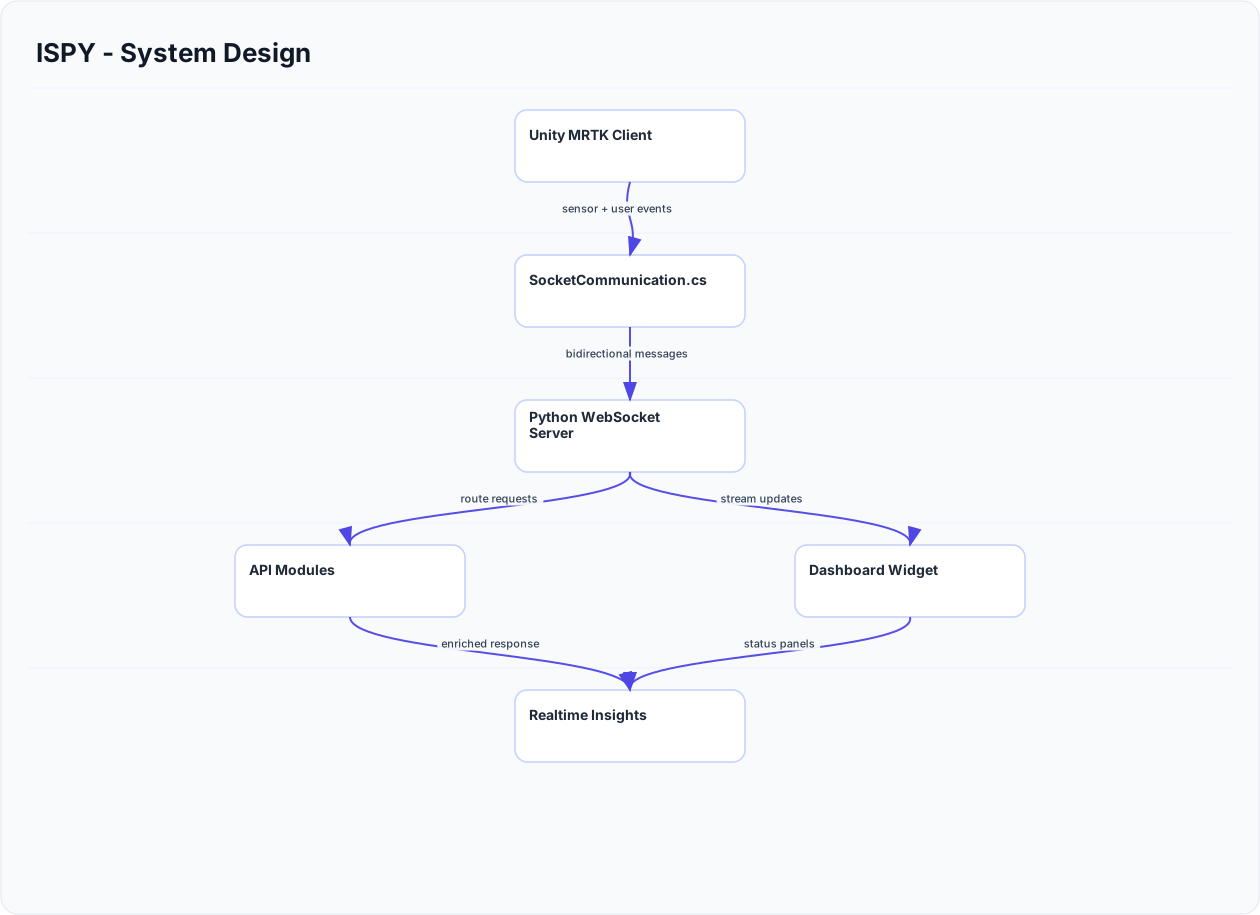
ISPY uses a Unity/MRTK client with websocket communication and a Python backend that manages connection queues, message routing, and optional FastAPI dashboard modules. Shared protobuf schemas structure cross-component data exchange.
Tech Stack
 Unity
Unity C#
C# Python
 FastAPI
 Protobuf
Tech choices were selected for fast hackathon iteration, clear separation of concerns, and deployable paths beyond demo scope.
System Design
System architecture is shown as a single cleaned diagram for readability.
Key Learnings
We learned that robust AR systems depend as much on communication architecture as model quality. Next steps would include stronger backpressure controls, observability around reconnect paths, and stricter schema/version handling.